
You Don’t Need More Clothes: Maybe You Need to Learn How to Use What You Already Have

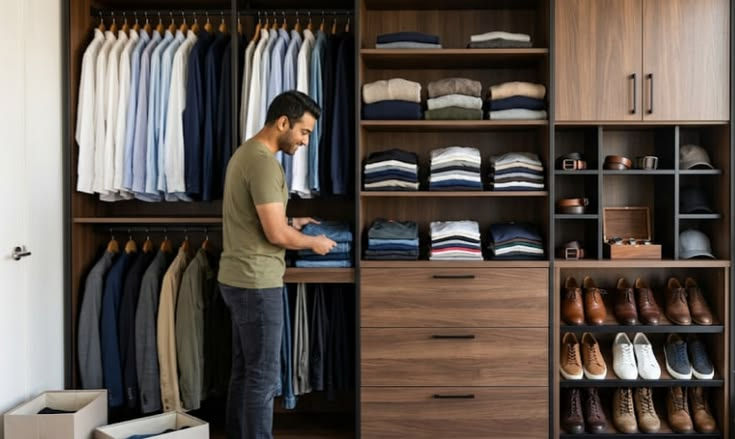
Opening a full wardrobe and deciding that you have nothing to wear sounds like a contradiction, but it is a very common experience. We have shirts, trousers, jackets, shoes, clothes bought while travelling, pieces that seemed essential when we bought them and others that have been waiting for months for the “right occasion”. Even so, we often end up wearing the same combinations again and again.
This happens because the number of clothes we own and the number of outfits we can create are not necessarily the same thing.
This difference is important because it helps explain why constantly buying new clothes may not solve the feeling that our wardrobe does not work. Someone can own relatively few pieces and still create many outfits because those pieces work well together. Another person can have hundreds of items and still struggle every morning because the clothes were bought separately, without thinking about how they connect.
Research from WRAP in the UK helps put this into perspective. The study found that British adults owned an average of around 118 pieces of clothing. Around 26%, about 31 items, had not been worn at least once during the previous year. WRAP estimated that around 1.6 billion unworn pieces were sitting in wardrobes across the UK.
These numbers are specific to the UK and should not be treated as a global picture. However, they highlight an important point: having more clothes does not automatically mean having more useful options.
The problem may begin with the way we shop
When we are in a shop, we usually judge each piece on its own. We ask whether it looks good, whether we like the colour, whether the price feels reasonable and whether it looks good on our body in that moment.
What we do not always do is consider the piece as part of a larger system.
How many things I already own will work with this shirt? Will this jacket work with the shoes I already have? Can I use this piece in different situations? Does it add something new to my wardrobe or is it simply another version of something I already own?
When we do not ask these questions, a wardrobe can slowly become a collection of nice individual pieces that do not necessarily work together. You may own a lot of clothes, but some of them need another purchase before you can actually wear them. One shirt only works with one pair of trousers. Those trousers seem to work with only one type of shoe. The blazer bought for one event never finds a place in everyday life.
The opposite can also happen. Some people build their entire wardrobe around a small number of formulas and then continue buying almost identical versions of the same things. Five similar T-shirts, several pairs of nearly identical trousers and different versions of the same trainers may be perfectly fine for someone who likes consistency. The problem starts when that person wants more variety but continues buying within exactly the same formula that already feels limiting.
Before buying more, it can therefore be much more useful to understand what is already in the wardrobe and why certain pieces are worn while others are forgotten.
Sometimes the answer is simple. The clothes no longer fit. They are damaged. They no longer suit your lifestyle or your body. But in many cases, the reason is even simpler.
You do not know what to do with them.
Knowing how to dress is not the same as knowing how to shop
There is a difference between recognising a beautiful piece of clothing and knowing how to build an outfit.
Styling exists in the relationship between different elements. Colour, proportion, shape, texture, contrast, formality, length, volume, shoes, accessories and context can completely change how the same piece looks.
A white shirt does not have only one purpose. With tailored trousers and the right shoes, it can be part of a professional outfit. Worn open over a T-shirt, with a different trouser shape and trainers, it creates a very different image. A jacket can work over a T-shirt, knitwear or a shirt. The same trousers can change completely depending on the shoes, the length of the hem and what is worn on top.
This means repeating clothes is not the same as repeating outfits.
And it certainly does not mean lacking style.
In fact, people who develop a strong sense of style often become very clear about which pieces deserve to appear regularly in their image. Some clothes almost become part of their personal signature because they work well, they are versatile, and they represent the person.
Constantly searching for something new may create a bigger wardrobe, but it does not automatically create a more interesting image.
This is why I like to think of a wardrobe as a system. A piece should not only be judged by how good it looks alone, but also by its ability to work with other things. The more useful connections there are between the pieces, the more functional the wardrobe becomes.
Image consulting often deals directly with this practical side of dressing. People may want to learn what to wear, what to buy and how to combine their clothes. They may also want a wardrobe that is easier to use, more practical and better for their budget.
Shopping better begins with using better
There is also an obvious financial side to this. A piece of clothing does not become a good investment simply because it was cheap, just as an expensive piece is not automatically a waste of money. It depends on quality, need, durability and how often it is worn.
A low-cost T-shirt worn once may have been a worse purchase than a more expensive jacket worn for several years.
This changes the question from simply “How much does it cost?” to “How much will I actually use it?”
Knowing your own wardrobe also helps reduce another common problem: buying the same thing repeatedly without realising it.
When we are not very clear about what we already own, we often repeat purchases because certain clothes make us feel safe. A particular fit worked before, so we buy it again. A certain type of shirt was easy to wear, so we keep buying similar ones. Slowly, the wardrobe grows with many versions of the same solution while other real needs remain unanswered.
A more strategic approach works differently. First, you identify what already works. Then you find the gaps. Only after that does it make sense to consider buying something new.
Shopping does not disappear. It simply stops being a random attempt to solve the feeling that something is missing.
There is also an environmental side
The way we consume clothes has become a much bigger discussion because fashion is no longer only about appearance. It is also about production, waste and environmental impact.
According to the European Environment Agency, each person in the European Union consumed an average of around 19 kilograms of clothing, footwear and household textiles in 2022. In 2019, the figure was around 17 kilograms. Of those 19 kilograms consumed in 2022, around 8 kilograms were clothing.
The agency also estimates that textile waste in the European Union reached around 16 kilograms per person in 2022. Textiles are among the areas of household consumption in Europe that create significant pressure through the use of raw materials, greenhouse gas emissions, water and land.
This means that wearing clothes for longer, repairing them, reusing them and avoiding unnecessary purchases are not only questions of personal style. They are also part of a much wider conversation about how we use resources.
Here in Ireland, where I live and work, the Environmental Protection Agency estimates that around 110,000 tonnes of textiles are thrown away as waste every year. Around 64,000 tonnes are found in household waste, and around 42,000 tonnes of that are clothing.
In April 2026, the Irish government also published its first National Policy Statement and Roadmap on Circular Textiles. The plan aims to reduce excessive production and consumption, encourage reuse and repair, and keep textiles in use for longer.
This shows that the life of our clothes is no longer only a conversation happening within fashion. It is becoming part of public policy as well.
However, this does not mean that buying clothes is wrong. A serious conversation about responsible consumption needs to avoid that kind of simple conclusion.
There are many good reasons to buy something new. Our bodies change. Our jobs change. We move countries. The weather changes. Our personal style develops. Clothes wear out. New needs appear. Fashion is also about pleasure, culture, identity, and creativity.
The more useful question is not “Should I buy this?”
It is “Why am I buying this?”
The difference between needing more clothes and needing direction
When someone tells me that they need more clothes, one of the first questions I would ask as an Image Architect is: what exactly is missing?
“Needing more clothes” is a very broad conclusion.
Perhaps one specific piece could connect several other things in the wardrobe. Perhaps the real problem is footwear. Maybe the issue is proportion. Some pieces may simply need alterations. Certain colours may feel difficult because they were bought without considering the rest of the wardrobe. Maybe the person has enough clothes but continues repeating the same outfits because they have never developed the knowledge to see other options.
That kind of diagnosis is very different from simply suggesting more shopping.
I use the title Image Architect because I believe building an image follows a logic that is similar to architecture. Before choosing the individual elements, you need to understand who will use the structure, what it needs to do and what kind of experience you want to create.
With personal image, this means understanding lifestyle, profession, body, style, personality, social context, personal goals and what someone wants their image to communicate.
Only after that is it recommended to analyse the clothes.
A good image consultation should not make someone feel that everything they own is wrong. It should help them understand what already works, what could work better, what needs adjusting, what no longer represents them and which gaps actually have to be filled.
It should also not create dependence on the consultant.
One of the most valuable results of image consulting is independence. The person starts to understand the reasons behind their choices and can use that knowledge afterwards without needing someone next to them every morning.
Maybe your next outfit is already in your wardrobe
Before looking for another shop, it may be more useful to investigate what is already there.
Which ten pieces do you wear most often, and why do they work? Which clothes are constantly forgotten? Why? Are there pieces that only work in one combination? Do some things simply require alterations? Do you own several versions of the same thing? Which real situations in your life still do not have the right clothes?
These questions start to reveal the architecture of the wardrobe.
And quite often, we discover that the problem is not a lack of material. It is a lack of structure.
Maybe a shirt that felt difficult to wear works perfectly with trousers you had never considered. Possibly a formal blazer becomes much more interesting when it is taken outside a business setting. Perhaps one different pair of shoes could make many forgotten pieces easier to wear. Perhaps changing the hem of a pair of trousers could thoroughly change how they look.
This is what styling can add. It is not only about seeing what a piece is. It is about seeing what it could become when it is placed in a different combination.
In my image consulting and styling work, including 100% online consultations, this is the process I aim to build. Understanding the person before changing the wardrobe, analysing what already exists before suggesting new purchases, and creating a visually interesting image that is also practical, realistic, and connected to everyday life.
Because an effective wardrobe is not necessarily the biggest, the most expensive or the most fashionable.
It is the one you can open and actually see possibilities.
So, Builders, before your next purchase, it may be worth doing something much simpler.
Look at your wardrobe again.
The next version of your image may not be waiting for you in a shop.
It may already be inside your wardrobe, waiting to be built.
Everton Tadeu, Image Architect and Personal Brand Strategist. Image Consulting and Styling, available online


Comments